
Writer Rod Miller goes live on “Dusty Trails and Tall Tales” Thursday, July 23, at 5:00 p.m. Mountain Time. Tune in on YouTube Livestream or FacebookLivestream for a discussion about the infamous Massacre at Bear River. See you there.

This
Thy Brother
paperback on sale now
v
Amazon US
v
Barnes & Noble
This
Thy Brother eBook on sale now
v
Amazon US
v
Apple Books
v
Barnes & Noble
v
Google Play
v
Kobo
Books


Fire up
your computer (or phone or wherever you watch podcasts) on July 23 at 5:00 p.m. Mountain
Time and log onto “Dusty
Trails and Tall Tales.” I will be talking with host Matthew Pizzolotto
about the Massacre at Bear River, and it should be an interesting discussion.
The United States Army killed more Indians (Shoshoni in this case) than at any
other engagement in the history of the West, yet the 1863 massacre is largely
forgotten to history. In this interview, we hope to shed a little more light on
the tragedy and give it a measure of the attention it deserves.
That’s the
news for now.
January 29 marks 163 years since a Shoshone winter camp was attacked by forces of the United States Army, leaving as many as 350 children, women, and men dead. Events leading up to the attack are many and complicated and years in the making. But the government’s actions cannot, in any way, be justified, excused, or explained.
It was a tragedy unprecedented at the time and unmatched since. No other of the many unpardonable actions against the native people who have populated the West for thousands of years can match the Massacre at Bear River. By any measure it was the worst we—our white American ancestors—could do. And yet it is little understood and almost entirely forgotten by history. The few accounts that do exist in history books are often incorrect and inaccurate.
For one of the few times over the past two decades, I will miss the annual commemoration at the massacre site, hosted by the Northwestern Band of the Shoshone Nation. But my heart will be with the families and descendants of the victims, and the hundreds of supporters who will gather a few miles north of Preston, Idaho, to honor the fallen as well as the survivors.
The Massacre at Bear River has been something of an obsession with me. I have written a book of history about the massacre, as well as magazine articles and other nonfiction accounts. And I have attempted to capture the emotion and the human aspects of the event in poems, song lyrics, short stories, and a novel (available in hardcover, paperback, and eBook).
The Massacre at Bear River is a stain on our nation that is not pleasant to remember, but one that should never be forgotten.


This story starts a few years ago but got derailed when Covid shut the world off for a time. A radio producer from Ireland contacted me to say he lived and worked in County Kerry, homeland of Patrick Edward Connor. Connor was the army commander behind the Massacre at Bear River (promoted from colonel to brigadier general following the atrocity), the Father of Utah Mining, and was involved in other military and business pursuits here in the West.
The man from Radio Kerry, Jerry O’Sullivan, wanted to create a radio documentary about Connor, was coming to Utah, and wondered if he could interview me. Then came Covid.
But all things must pass, and early this summer he contacted me to say he was on his way. We spent some time at the remnants of Fort Douglas in Salt Lake City, including a spell at Connor’s gravesite in the cemetery there to record the interview. O’Sullivan interviewed other people here, then went back to Ireland to put the program together. It aired on Radio Kerry in early August, and “Glory Hunter” is now available on Spotify. (Just click on “Glory Hunter” and you’ll go there.)
O’Sullivan also wrote a commentary on Connor, the connections between Ireland and the USA, and the way we remember history. That article appeared recently in the Salt Lake Tribune. (Again, a click should get you there.)
Connor was an interesting man of many accomplishments—not all of them laudable. It will be worth your time to hear—and read—what Jerry O’Sullivan has to say about him.

There’s literary art as well, and that’s where I come in. Or go on, if you’d rather.
On Friday, June 24, at 4:00 p.m. I’ll be reading selections from my writings about the 1863 Massacre at Bear River, the bloodiest encounter between the US Army and Indians in the history of the American West. It’s a tragedy largely forgotten and ignored in our collective memory, and that needs to change.
Selections from song lyrics, poetry, short stories, a novel, as well as a nonfiction book and magazine article are on the agenda.
If you’re anywhere near Salt Lake City from June 23 through June 26, be sure to visit the Utah Arts Festival. I’ll be there, and watching for you.
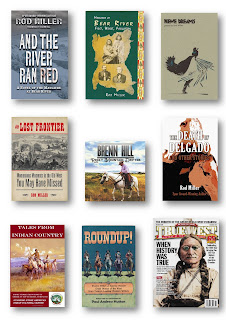
For several years now, I have been obsessed with the Massacre at Bear River. I can’t say for sure when this obsession took hold, but I do remember why.
The history of the American West has always been of interest to me, and that interest has always included our growing nation’s history of eliminating any competition for the land and its resources. In other words, the systematic exclusion and eradication of the native tribes that occupied the land.
At some point in my education, after years of study, I learned
about the Massacre at Bear River where, on 29 January 1863, the United States
Army launched a dawn attack on a Shoshoni village and killed some 250 to 350
men, women, children, and babies. Most of the dead were noncombatants. And the
annihilation included rape and torture, as well as the destruction of food,
clothing, lodges, and the theft of the horse herds on which the people relied.
It was the deadliest massacre of American Indians by the Army in all of Western
history.
I was astounded—dumbfounded—that such a pivotal event had largely escaped notice in American history. Little had been written about it, and most of what had been published was incomplete at best, and inaccurate at worst.
Thus began my obsession. The result, to date, is represented above. I have written a lot about the Massacre at Bear River. Most recently, a novel. Before that, in no particular order, a nonfiction book and shorter pieces of nonfiction included in a book and for a magazine. Short fiction for an anthology, and published in my own collection of short stories. Poems in an anthology and a chapbook. And a poem that became a song.
There may well be more to come, as the Massacre at Bear River continues to haunt me.
When January 29 rolls around again, as it will in a few weeks, I
hope to be at the site of the Massacre at Bear River to once again join the
Northwestern Band of the Shoshone Nation in honoring their departed ancestors,
who have yet to claim their proper place in history.

January 29, 1863, is one of the darkest days in the history of the American West. That morning, United States Army troops slaughtered some 250 to 350 Shoshoni men, women, and children on the banks of the Bear River in what is now southeastern Idaho. No other encounter between the army and Indian tribes in the West approaches that massacre in terms of Indian blood spilled, brutal savagery, or body count.
Just released from Five Star Publishing is my latest book, And the River Ran Red—A Novel of the Massacre at Bear River.
Earlier, I wrote a nonfiction book about this tragic event, Massacre at Bear River: First, Worst, Forgotten. I have also written about it for magazines, short stories, in poems, and, with Western singer and songwriter Brenn Hill, song lyrics.
This short novel—as with the fictional stories, poetry, and song—allowed me to build upon the known facts and consider the thoughts, feelings, and words of those involved in all facets of the massacre. So, while the novel is fiction, it presents truths of a different kind as it both hews closely to the facts and expands upon the emotional color of the times.
I hope many will read And the River Ran Red for the sole reason that it may help spread knowledge of, and horror about, what may well be the greatest of all tragedies in the history of the American West, as well as an appreciation for the people of the Northwestern Band of the Shoshone Nation who press on with determination and triumph still today.


As regular readers know, January 29, 1863 is the date of the Massacre
at Bear River, during which US Army soldiers slaughtered hundreds of Shoshoni
Indians, many of them old people, women, and children. It was the deadliest
massacre of Indians by the military in the history of the West.
For many years, members of the Northwestern Band of the Shoshone
Nation have met at the site to commemorate the lives and deaths of their
ancestors, who were nearly wiped out in the massacre. The public is graciously
hosted at the ceremonies.
This year, 2021, things were different.
Owing to the Covid pandemic, the affair was smaller in scale, with
formal invitations extended only to members of the Band. Some interested
parties, including yours truly, drove to the site to honor the day in whatever
way was possible. We were welcomed.
But, more important, for the first time the ceremonies were held
in a new location—on bluffs above the river bottom on land owned—for the first
time in 158 years—by the Band, and near where the Boa
Ogoi Cultural Interpretive Center is taking shape. (Boa Ogoi means Big
River in Shoshoni, and is the traditional name for the Bear River.)
Pictured is the relatively small but caring crowd at the
commemoration; former tribal chairman and main force behind the Interpretive
Center, Darren Parry; and tribal elder Gwen Timbimboo Davis. Both Parry and
Davis are descendants of Sagwitch Timbimboo, tribal leader who was wounded at
but survived the Massacre, and held the remnants of the band together in the
aftermath.
Donations
toward the development of the Boa Ogoi Cultural Interpretive Center are
welcome, and certainly a worthwhile expenditure for lovers of Western History
who recognize the importance of remembering even its darkest days.


