
Writer Rod Miller goes live on “Dusty Trails and Tall Tales” Thursday, July 23, at 5:00 p.m. Mountain Time. Tune in on YouTube Livestream or FacebookLivestream for a discussion about the infamous Massacre at Bear River. See you there.
January 29 marks 163 years since a Shoshone winter camp was attacked by forces of the United States Army, leaving as many as 350 children, women, and men dead. Events leading up to the attack are many and complicated and years in the making. But the government’s actions cannot, in any way, be justified, excused, or explained.
It was a tragedy unprecedented at the time and unmatched since. No other of the many unpardonable actions against the native people who have populated the West for thousands of years can match the Massacre at Bear River. By any measure it was the worst we—our white American ancestors—could do. And yet it is little understood and almost entirely forgotten by history. The few accounts that do exist in history books are often incorrect and inaccurate.
For one of the few times over the past two decades, I will miss the annual commemoration at the massacre site, hosted by the Northwestern Band of the Shoshone Nation. But my heart will be with the families and descendants of the victims, and the hundreds of supporters who will gather a few miles north of Preston, Idaho, to honor the fallen as well as the survivors.
The Massacre at Bear River has been something of an obsession with me. I have written a book of history about the massacre, as well as magazine articles and other nonfiction accounts. And I have attempted to capture the emotion and the human aspects of the event in poems, song lyrics, short stories, and a novel (available in hardcover, paperback, and eBook).
The Massacre at Bear River is a stain on our nation that is not pleasant to remember, but one that should never be forgotten.


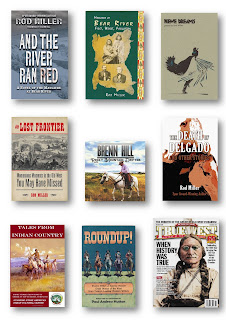
For several years now, I have been obsessed with the Massacre at Bear River. I can’t say for sure when this obsession took hold, but I do remember why.
The history of the American West has always been of interest to me, and that interest has always included our growing nation’s history of eliminating any competition for the land and its resources. In other words, the systematic exclusion and eradication of the native tribes that occupied the land.
At some point in my education, after years of study, I learned
about the Massacre at Bear River where, on 29 January 1863, the United States
Army launched a dawn attack on a Shoshoni village and killed some 250 to 350
men, women, children, and babies. Most of the dead were noncombatants. And the
annihilation included rape and torture, as well as the destruction of food,
clothing, lodges, and the theft of the horse herds on which the people relied.
It was the deadliest massacre of American Indians by the Army in all of Western
history.
I was astounded—dumbfounded—that such a pivotal event had largely escaped notice in American history. Little had been written about it, and most of what had been published was incomplete at best, and inaccurate at worst.
Thus began my obsession. The result, to date, is represented above. I have written a lot about the Massacre at Bear River. Most recently, a novel. Before that, in no particular order, a nonfiction book and shorter pieces of nonfiction included in a book and for a magazine. Short fiction for an anthology, and published in my own collection of short stories. Poems in an anthology and a chapbook. And a poem that became a song.
There may well be more to come, as the Massacre at Bear River continues to haunt me.
When January 29 rolls around again, as it will in a few weeks, I
hope to be at the site of the Massacre at Bear River to once again join the
Northwestern Band of the Shoshone Nation in honoring their departed ancestors,
who have yet to claim their proper place in history.


